
Cooking Equipment
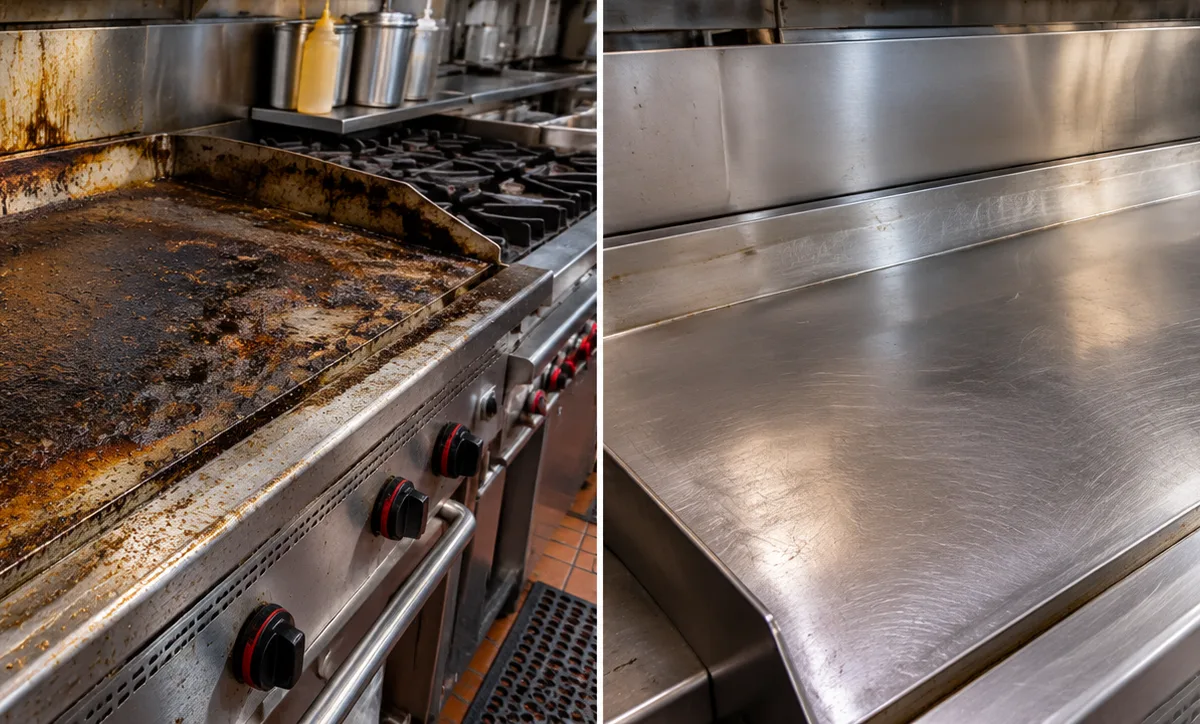
Exterior and accessible interior cleaning for ranges, ovens, fryers, flat-top griddles, charbroilers, steamers, and other specified appliances. Components are handled according to the agreed scope and manufacturer guidance.
Serving Tucson, Arizona & surrounding areas
Commercial Kitchen Cleaning · Tucson
Deep cleaning for cooking equipment, prep areas, floors, walls, and exhaust systems, scheduled around your operating hours and documented with a clear scope.
Kitchen
CLEAN
Tucson, AZ
Scope Before Service
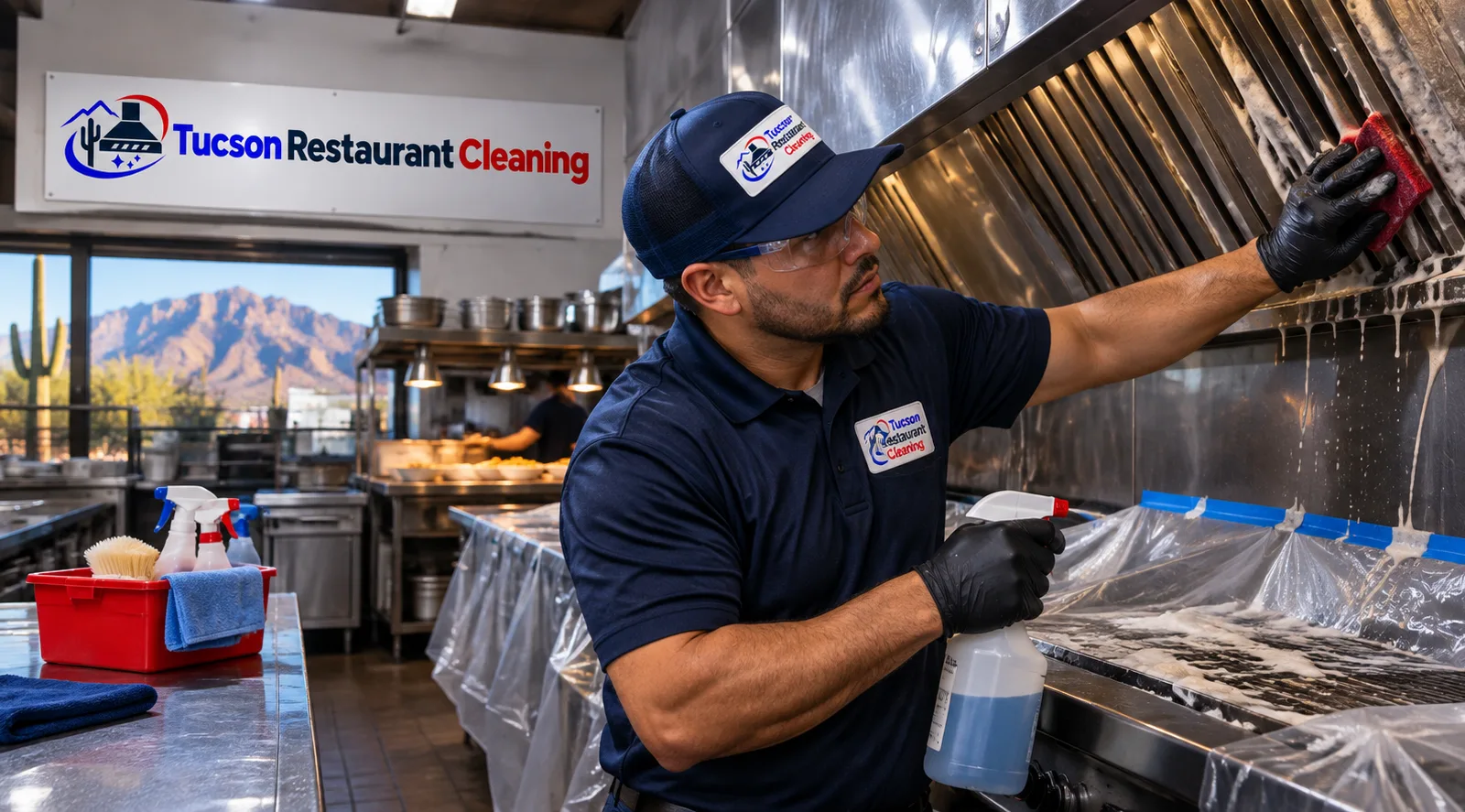
Commercial Kitchen Cleaning Services remove grease, carbon deposits, food residue, and soil from the areas routine shift cleaning cannot fully address. Tucson Restaurant Cleaning develops the scope around your equipment, kitchen layout, operating schedule, and current condition. That may mean a targeted equipment cleaning, recurring detail work, or a complete commercial kitchen deep cleaning.
As Tucson's local restaurant service, we do the work with practical kitchen constraints in mind: hot equipment needs time to cool, food and utensils must be protected, and cleaned areas must be ready before the next prep period. Tucson's heat can also increase the strain on busy kitchens and rooftop work areas, so access and timing are planned before service begins.
We work with restaurants and other commercial food operations near our base on West Sahuaro Street. The scope is confirmed before cleaning starts, including which appliances can be moved, which utility connections must remain untouched, and whether specialty exhaust cleaning is included.
Detailed Kitchen Scope
Exterior and accessible interior cleaning for ranges, ovens, fryers, flat-top griddles, charbroilers, steamers, and other specified appliances. Components are handled according to the agreed scope and manufacturer guidance.
Stainless steel tables, shelving, sinks, splash areas, and accessible surfaces can be degreased and detailed. Food-contact surfaces require an appropriate final rinse and sanitation step before use.
Grease collects along edges, under movable equipment, behind cooking lines, and around floor drains. Cleaning may include scraping, degreasing, agitation, rinsing, and wet recovery where conditions allow.
Hood canopies, removable filters, and other accessible components may be included. A full exhaust-system service is a distinct scope that should identify the plenum, ductwork, and fan rather than assuming they are covered.
A kitchen does not always need a complete shutdown clean. High-soil appliances, cook lines, storage zones, and other problem areas can be addressed through a focused written scope.
Recurring service helps control buildup between major deep cleans. The schedule should reflect cooking volume, menu, equipment type, and the amount of grease-laden vapor produced.
Beyond Routine Cleaning
Daily cleaning is necessary, but it usually concentrates on visible and immediately accessible surfaces. Professional kitchen cleaning addresses baked-on grease, carbonized residue, corners, casters, equipment sides, wall junctions, and spaces exposed when movable appliances are pulled away from the line.
The method changes with the surface. Stainless steel requires non-damaging tools and attention to its grain. Heavy deposits may need dwell time after a suitable degreaser is applied. Floors often require mechanical agitation, careful rinse-water control, and attention to slip hazards. Painted surfaces, aluminum parts, electrical controls, pilot assemblies, and seals need more cautious treatment.
Before kitchen equipment cleaning begins, the team identifies hot surfaces, sharp edges, gas or electrical connections, and components that should not be saturated. Work near fixed utility connections is performed without casually moving equipment beyond safe access. The result is a controlled cleaning process rather than indiscriminate pressure washing.
Exhaust-System Scope
Defined
SCOPE
Tucson
Restaurant hood cleaning requires a clearly defined scope. Cleaning the visible canopy or washing removable baffle filters is not the same as servicing the complete kitchen exhaust system. A full system can include the hood interior, filter bank, plenum, accessible ductwork, and exhaust fan. Access panels, roof access, system design, and grease accumulation all affect the work.
NFPA 96 is the commonly referenced standard for ventilation control and fire protection in commercial cooking operations. Inspection frequency depends on the type and volume of cooking. The authority having jurisdiction and the property's insurer may also have requirements for a specific operation.
Direct sun can make rooftop fans and surrounding surfaces extremely hot, while monsoon weather can make roof access unsafe. Full exhaust-cleaning scopes should identify components, access limitations, cleanup, and any service documentation that will be provided.
From Review to Completion
We discuss the cooking line, equipment, soil level, access, operating hours, and areas causing concern. Photos or an on-site review may be needed when buildup is heavy or access is limited.
The scope identifies included surfaces and equipment, exclusions, expected access, utility considerations, and whether the work is a targeted clean or a full-kitchen project.
Food, utensils, smallwares, and sensitive items are removed or protected. Equipment is shut down and cooled as required, and the work zone is arranged to control chemical use, grease, and rinse water.
The crew applies methods suited to each surface, which may include scraping, chemical dwell time, hand agitation, component washing, floor scrubbing, and wet recovery.
Included areas are checked against the scope. Any access limitation or condition that prevented cleaning is identified so the kitchen manager knows what was completed before operations resume.
Tucson Operating Context
The right plan depends more on the operation than the neighborhood. Downtown kitchens may have tight loading areas, shared waste routes, and limited overnight access. Fourth Avenue restaurants often operate in compact spaces where equipment clearances and customer hours shape the schedule. University-area kitchens may have narrow service windows between meal periods. Larger restaurant and hospitality properties near the Catalina Foothills may involve longer cook lines, several preparation zones, or multiple exhaust systems.
These conditions affect labor, staging, and access. They do not change the core requirement: the kitchen cleaning company should inspect the actual work area and define the scope before assigning time or price. A small kitchen with severe carbon buildup can demand more detailed labor than a larger, regularly maintained space.
Tucson Restaurant Cleaning is based at 149 W Sahuaro St, Suite 5, Tucson, AZ 85705. We arrange restaurant kitchen cleaning around practical access and operating needs rather than applying the same checklist to every facility.
Planning Your Budget
Commercial kitchen cleaning in Tucson typically ranges from about $500 to $2,500 for a targeted or moderate deep clean, while large kitchens, severe buildup, or complete exhaust-system work may cost more. A single equipment item or small cook-line project may fall below that range.
Final pricing changes with kitchen size, grease and carbon levels, equipment quantity, hood-system scope, roof or duct access, scheduling, and whether appliances can be moved safely. A written estimate should identify inclusions and exclusions. The exact cost is confirmed after the kitchen and requested scope are reviewed.
A clear scope makes scheduling easier and prevents assumptions about equipment, hood components, and hard-to-reach areas. Describe the kitchen, operating hours, and priority areas to receive a practical cleaning plan.
Call for a Free QuoteOperational Details
A targeted equipment clean may take several hours, while a full kitchen deep cleaning can require an overnight shift or a longer shutdown window. Kitchen size, buildup, equipment movement, access, and exhaust-system scope determine the schedule. Tucson operations with daytime-only loading access or shared service alleys may need additional planning.
Yes, cleaning can often be planned after closing or during another low-activity period. Equipment must have enough time to cool, and the team needs safe access before the next preparation shift. The schedule should also allow surfaces to dry and food-contact areas to receive the operation's required sanitation step.
Ductwork and the rooftop fan are included only when the written scope specifically identifies them. Canopy cleaning and filter washing alone do not constitute complete exhaust-system cleaning. Tucson roof access, fan condition, access panels, weather, and duct configuration should be reviewed before full-system work is scheduled.
The interval should be based on cooking volume, menu, equipment, visible buildup, internal procedures, and applicable inspection or insurance requirements. Frying, charbroiling, and wok cooking can create heavier grease deposits than lower-volume cooking. Daily cleaning and periodic detailed cleaning address different layers of soil.
Food, utensils, smallwares, and exposed consumables should be removed or securely protected before cleaning starts. Countertop appliances may also need to be relocated. The preparation plan should state what the restaurant handles and what the cleaning crew handles so the scheduled work can begin on time.
Accessible areas behind equipment can be cleaned when appliances can be moved without damaging gas, electrical, water, ventilation, or restraint connections. Fixed or tightly connected equipment may limit access. Those limitations should be recorded during the initial review rather than discovered after work begins.
Ask for a written scope that names the equipment, surfaces, exhaust components, preparation duties, exclusions, schedule, and final review process. Confirm how chemicals and rinse water will be controlled and whether service documentation is provided when required. Comparing defined scopes is more useful than comparing a single total with no detail.
Define the Work
Tell Tucson Restaurant Cleaning what needs attention, when the kitchen is available, and whether equipment or exhaust components are involved. We will help define the work so you can review the scope before cleaning begins.