Restaurant Cleaning · Marana

Restaurant Cleaning Marana

Detailed commercial kitchen cleaning built around your equipment, operating hours, food safety procedures and recurring maintenance needs.

✓ Equipment-focused care
✓ After-hours planning
✓ Clear written scope
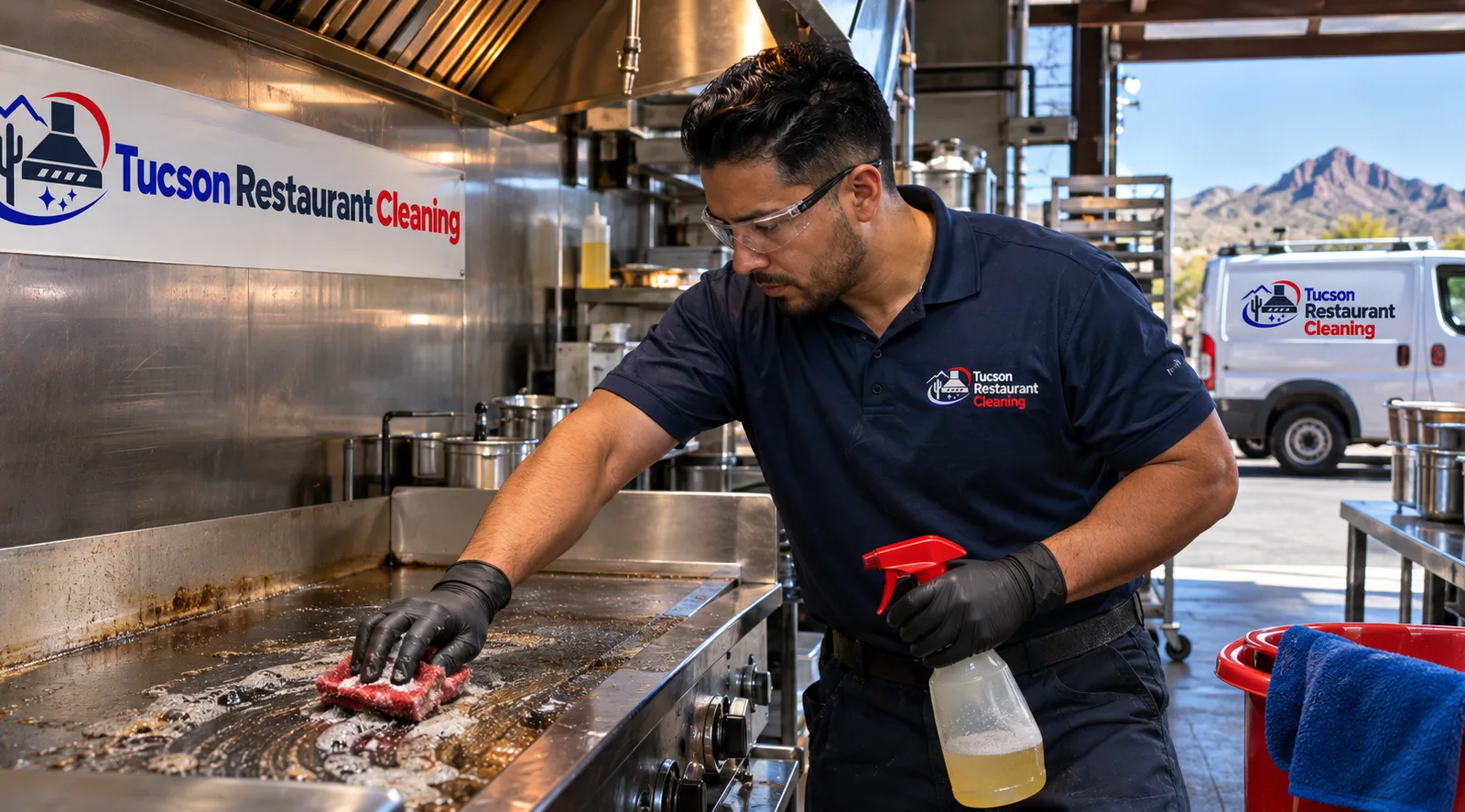
A restaurant cleaning technician removing grease from stainless steel cooking equipment in a clean, active Marana commercial kitchen

Restaurant

CLEAN

Marana, AZ

Local Kitchen Care

Dependable Restaurant Cleaning in Marana

Restaurant Cleaning Marana helps commercial kitchens control grease, food residue and buildup in the places routine closing work may not fully reach. Tucson Restaurant Cleaning handles detailed cleaning for restaurants, cafés, bars, bakeries, food-service counters and other commercial kitchens. Work can be planned as a one-time deep clean, targeted equipment service or recurring maintenance.

Our technicians clean around the demands of food service. That means establishing the scope before work starts, accounting for equipment that needs to cool, protecting nearby food-contact areas and coordinating access so the kitchen can return to normal use. Marana businesses rely on us as a professional restaurant company in Tucson, AZ operating from our Tucson location.

Marana kitchens contend with airborne desert dust as well as the grease and food particles produced during cooking. Dust can settle on upper ledges, equipment tops, casters and other low-touch surfaces, where it mixes with oily residue and becomes harder to remove. A detailed plan addresses those neglected areas without treating every surface or appliance the same way.

Equipment-Focused Service

Restaurant Equipment Cleaning Marana Kitchens Can Schedule Around Service

Commercial appliances need cleaning methods suited to their materials, components and level of buildup. Stainless steel exteriors are treated with compatible products and wiped with the grain. Removable racks, trays, grease cups and similar parts may be cleaned separately. Technicians also pay attention to handles, control surrounds, legs, casters, splash zones and the floor beneath movable units.

The scope may cover ranges, ovens, fryers, griddles, charbroilers, salamanders, prep tables, refrigeration exteriors and other accessible equipment. Service boundaries matter. Cleaning does not replace appliance repair, hood-system inspection, fire-suppression work or manufacturer-required maintenance. Electrical components, gas connections, pilot assemblies and sensitive controls require appropriate precautions and are not casually sprayed or saturated.

For properties near Interstate 10 or the Ina Road commercial area, timing can be planned around deliveries, customer traffic and prep windows. Restaurants farther north toward Dove Mountain may prefer consolidated visits that address several equipment zones during one closure period. Access, parking, loading arrangements and the amount of equipment all affect the practical plan.

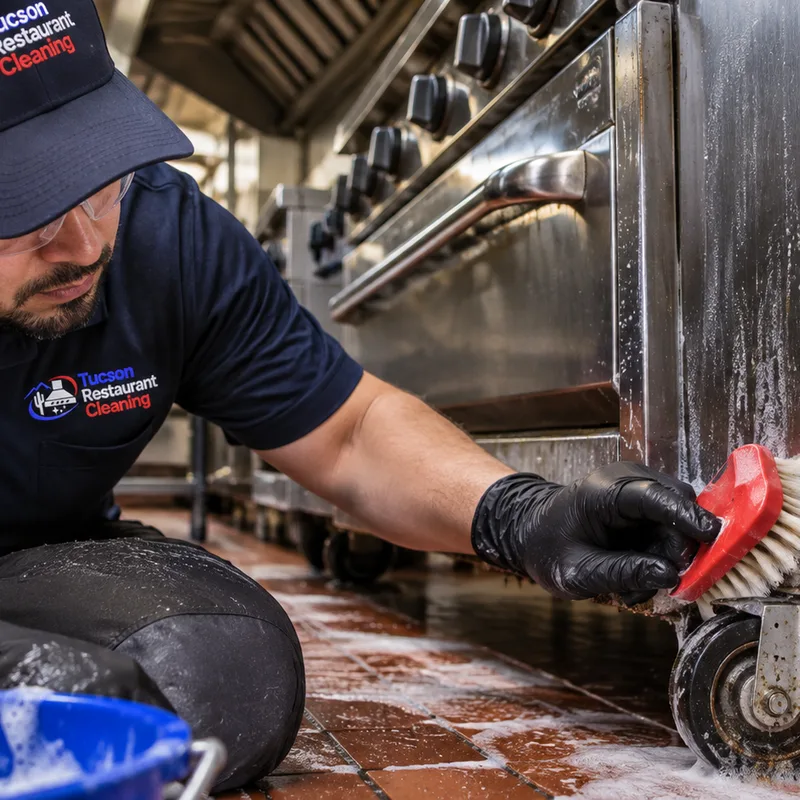
Close view of a technician degreasing the sides, legs and caster area of a stainless steel commercial range in a Marana restaurant
Detail work reaches equipment edges, supports and surrounding surfaces that daily wipe-downs often miss.

Defined Cleaning Scope

What a Commercial Kitchen Cleaning Scope Can Include

Cooking Equipment

Cleaning may include accessible exteriors, backsplashes, removable components and the surrounding surfaces of fryers, ranges, ovens, griddles and charbroilers. Heavy carbon deposits and baked-on grease are assessed before the cleaning method is selected.

Prep and Food-Contact Areas

Prep tables, counters, sinks and compatible food-contact surfaces can be washed and treated according to the agreed procedure. Cleaning removes soil first; sanitizing is a separate step that requires the correct product, dilution and contact time.

Floors, Edges and Equipment Gaps

Grease and debris often collect along wall edges, under movable equipment and around legs or casters. These areas can be scrubbed after loose soil is removed, with attention to slip risk and floor-material compatibility.

Refrigeration Exteriors

Service can address doors, handles, gaskets, tops, sides and accessible shelving on coolers and freezers. Internal mechanical work, refrigerant systems and electrical repair remain outside a cleaning scope.

Walls and High-Touch Surfaces

Washable wall areas, kick plates, door surfaces, handles and other touchpoints can be added when their materials tolerate the chosen cleaner. Painted or delicate finishes may require a test area.

Recurring Detail Rotation

A recurring plan can rotate time-intensive work by zone so equipment sides, storage edges and less accessible surfaces receive regular attention without closing the entire kitchen for every visit.

Scope to Completion

How Restaurant Cleaning Marana Service Is Planned

Defined

SCOPE

Marana

  1. 01

    Walk Through the Kitchen

    We discuss the equipment, operating schedule, access conditions and problem areas. Existing damage, delicate finishes, heavy carbon buildup and units that cannot be moved are identified before the scope is finalized.

  2. 02

    Set the Scope and Timing

    The written plan identifies included surfaces, exclusions and any preparation expected from restaurant staff. Service may be scheduled after closing, before prep or during another workable downtime, subject to availability.

  3. 03

    Prepare the Work Area

    Food and portable items are moved or protected as agreed. Equipment must be shut down and cool enough to clean safely. Technicians establish a controlled work area and keep cleaning products away from exposed ingredients.

  4. 04

    Clean by Zone

    Loose debris is removed before degreasing and scrubbing. Dwell time, agitation and rinsing or wiping are adjusted to the soil and surface. Removable parts are returned only after the relevant cleaning steps are complete.

  5. 05

    Review the Completed Work

    The serviced areas are checked against the agreed scope. Any inaccessible spots, permanent staining, damaged finishes or buildup requiring a different trade are documented so the manager knows what needs further attention.

Method Matters

Grease Removal Requires the Right Method

Grease does not respond well to hurried wiping. A degreaser generally needs adequate dwell time to loosen oily soil before controlled agitation. Carbonized residue may require repeated treatment and non-damaging tools rather than excessive force. The product must also be compatible with stainless steel, aluminum, painted surfaces, tile, grout and resilient flooring.

Mixing chemicals is unsafe. Acidic products and chlorine-based products should remain separate, and restaurant staff should provide access to Safety Data Sheets for chemicals maintained at the facility. When sanitizing is included, technicians follow the product label for concentration and contact time. A sanitizer cannot work properly through a layer of grease or food soil, which is why cleaning comes first.

Marana's dry conditions can add dust to exterior intake areas, ledges and equipment tops. Kitchen staff can reduce buildup between professional visits by wiping splashes promptly, emptying grease receptacles on schedule and keeping equipment-clearance areas free of loose packaging. These tasks support deeper cleaning but do not replace it.

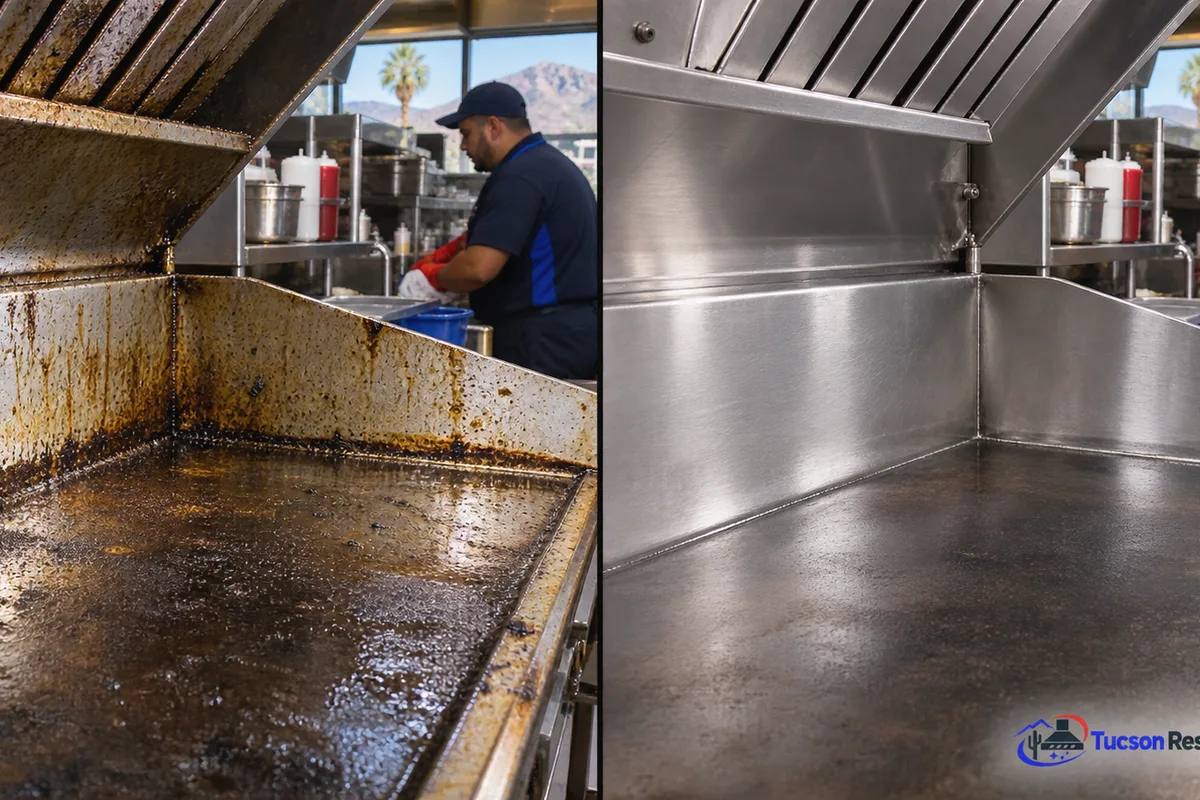
Side-by-side view of a grease-coated commercial griddle surround before cleaning and the same stainless steel area after detailed degreasing
A representative before-and-after view focused on accessible grease and carbon removal.

Recurring Maintenance

A Practical Schedule for Your Kitchen

The right frequency depends on cooking volume, menu, equipment type and how much detailed cleaning the in-house crew performs. A fryer-heavy kitchen may need frequent attention around splash zones and adjacent floors. A bakery may put more emphasis on flour dust, racks and oven surroundings. A café with limited hot cooking can have a different rotation.

Recurring service works best when responsibilities are clear. Restaurant staff usually continue daily closing tasks, spill response and routine food-contact sanitation. Professional visits can then focus on deeper grease removal, equipment edges, difficult access points and planned zone rotations. This division keeps routine needs from being deferred until buildup becomes severe.

Tucson Restaurant Cleaning can build the scope around a single problem area or a broader kitchen reset. Managers should mention overnight access rules, alarm procedures, loading restrictions, equipment that cannot be disconnected and the time by which the kitchen must be ready for prep. Those details directly affect crew planning and the amount of work that fits within a visit.

A written cleaning scope helps your manager compare priorities, prepare the kitchen and schedule the work around service hours.

Call for a Free Quote

Service Details

Questions About Restaurant and Equipment Cleaning in Marana

How much does restaurant cleaning cost in Marana?

Restaurant cleaning is usually quoted after the kitchen size, equipment count, soil level and requested tasks are reviewed. A lightly soiled recurring visit requires less labor than a first-time deep clean involving baked-on grease, movable appliances and multiple cooking lines. After-hours access, required crew size and the need to clean removable components also affect pricing. Tucson Restaurant Cleaning confirms the exact scope and price after discussing the facility and, when needed, inspecting the kitchen.

Can cleaning be completed after the restaurant closes?

After-hours cleaning may be available when crew scheduling, building access and the required work window allow it. Marana restaurants should provide closing and reopening times, alarm instructions, entry arrangements and the deadline for morning prep. Cooking equipment must have enough time to cool before technicians can safely clean it. The final schedule is agreed upon before service.

How long does a commercial kitchen deep clean take?

The duration depends on the kitchen layout, equipment condition and number of technicians assigned. A targeted equipment area may fit into one downtime window, while a heavily soiled kitchen with several cooking zones can require a longer visit or staged service. An initial walkthrough helps determine whether the requested work can be completed before the next prep shift.

Do you clean fryers, ovens and griddles?

Accessible surfaces and removable parts of fryers, ovens and griddles can be included in a Restaurant Equipment Cleaning Marana scope. Units need to be shut down, cool and prepared according to the agreed plan. Technicians do not disconnect gas lines, repair electrical components or perform manufacturer maintenance unless separately qualified and contracted for that work.

Does restaurant cleaning include hood and exhaust system cleaning?

Hood and exhaust work should be confirmed separately because grease-removal cleaning around cooking equipment is not automatically the same as cleaning an exhaust system. Ducts, fans, filters and fire-suppression components may require specialized access, documentation or qualified contractors. The written scope should state exactly which hood-area surfaces, if any, are included.

Do we need to remove food before the crew arrives?

Exposed food, utensils and portable prep items should be removed or protected before cleaning begins. Your preparation checklist may also require emptying selected shelves, securing ingredients and shutting down designated appliances. Clear counters and safe access around equipment let the crew concentrate on the agreed work and reduce the risk of chemical contact with food-service items.

Can you provide recurring restaurant cleaning near Dove Mountain or Ina Road?

Recurring service may be arranged for Marana businesses near Dove Mountain, Ina Road and other nearby commercial areas, subject to route and crew availability. Frequency is based on cooking volume, equipment, operating hours and the tasks handled by your staff. A zone rotation can spread detailed work across scheduled visits while daily sanitation remains with the restaurant team.

Will professional cleaning remove every stain and carbon mark?

Professional cleaning can remove substantial grease and food soil, but permanent discoloration, corrosion, heat damage and deeply carbonized deposits may remain. Aggressive scraping can damage stainless steel or coated finishes, so technicians balance appearance with material protection. Existing wear and areas needing repair are identified during the review rather than treated with unsafe force.

Define the Work

Plan a Cleaner, More Manageable Kitchen

Tell Tucson Restaurant Cleaning about your equipment, operating hours and highest-priority areas. We will help define a practical scope for your Marana restaurant and explain what to prepare before work starts.