
Cook-Line Exteriors
Degreasing can address appliance fronts, sides, control-area surrounds, legs, and accessible gaps. Sensitive controls, pilot assemblies, and electrical openings require protection.
Serving Tucson, Arizona & surrounding areas
Restaurant Kitchen Cleaning · Catalina Foothills
Detailed grease removal and high dusting for commercial kitchens, with a written scope shaped around your equipment, operating hours, and problem areas.
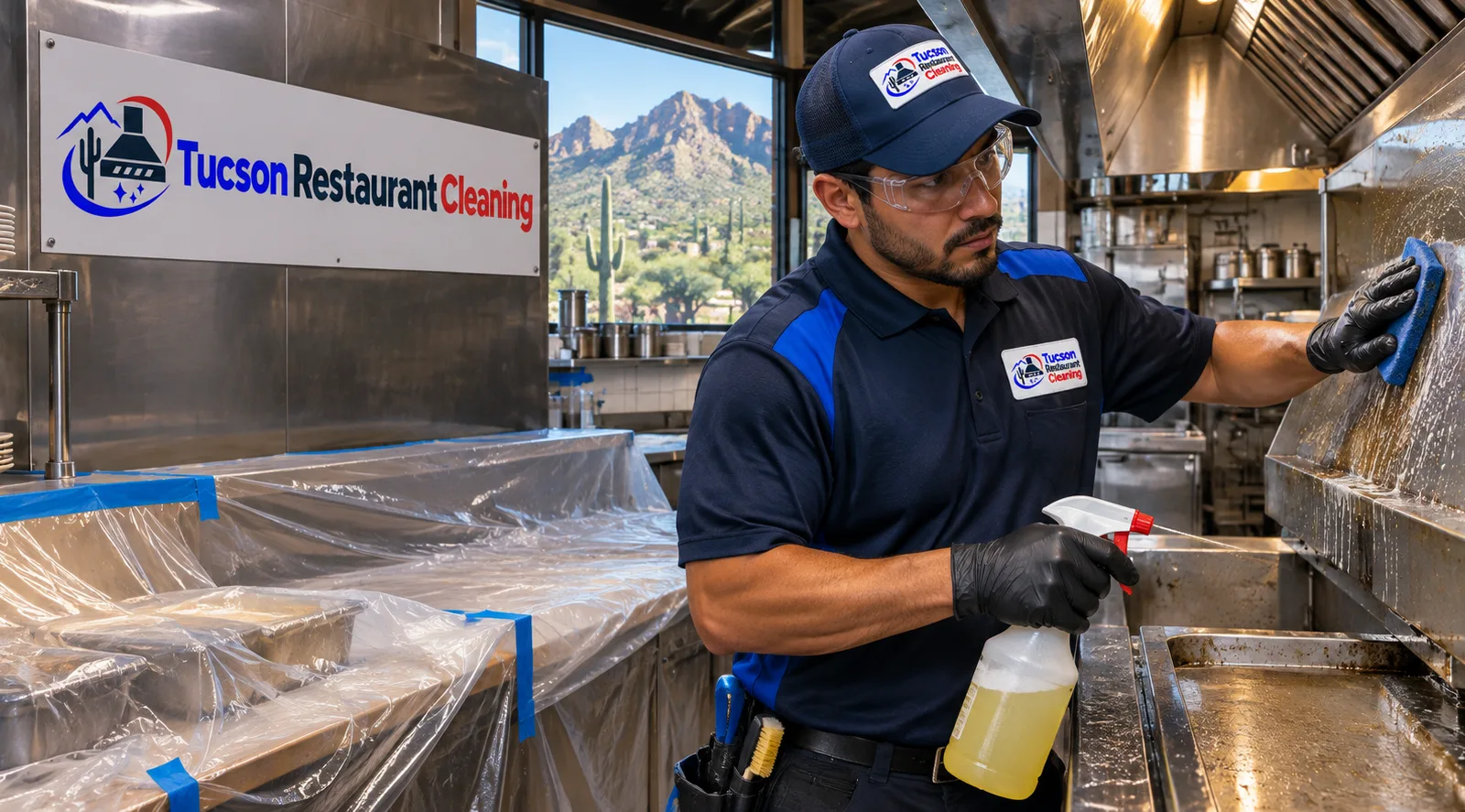
Kitchen
CLEAN
Foothills
Scope Before Service
Restaurant Kitchen Cleaning Catalina Foothills businesses need should address the places routine closing work cannot fully reach. Grease mist settles on equipment sides, walls, pipes, ledges, and overhead surfaces. Crumbs and residue collect under appliances and along floor edges. Left in place, that buildup can cause odors, attract pests, make floors slippery, and add work to every shift.
Tucson Restaurant Cleaning provides scheduled deep cleaning for independent restaurants, cafés, bars, and other commercial food operations. Our restaurant specialists serving Tucson build the work around the kitchen's layout, access limits, and shutdown window rather than applying one checklist to every property. Our Tucson base also makes it practical to coordinate work with operators in Catalina Foothills and the surrounding area.
The first step is defining what is included. A useful scope identifies equipment that can be moved, surfaces that require degreasing, overhead areas that need high dusting, and anything that must remain untouched. It also separates general kitchen cleaning from regulated or specialized work such as internal exhaust-system service, fire-suppression service, pest control, and appliance repair.
Detailed Kitchen Scope
The scope may cover cook-line exteriors, stainless steel tables, prep-area surfaces, shelving, wall panels, sinks, splash zones, cooler and freezer exteriors, equipment legs, casters, floor edges, and reachable areas beneath movable appliances. Degreasing is matched to the surface so painted finishes, plastics, seals, labels, and electrical components are not treated like bare stainless steel.
Floors often require more than a quick mop. Grease can remain in grout lines, textured flooring, corners, and the narrow spaces around equipment feet. A deep clean uses controlled application, agitation, recovery, and rinsing where the floor system permits it. Standing water must be controlled around electrical connections, equipment bases, and transitions into dining or storage areas.
Food-contact surfaces require special handling. Chemicals should be used according to their labels, and any surface that may contact food must receive the required rinse or sanitizing step before it returns to service. We discuss reopening needs and equipment restrictions before work starts, including which appliances must be cool, disconnected, or moved by restaurant staff or an authorized technician.
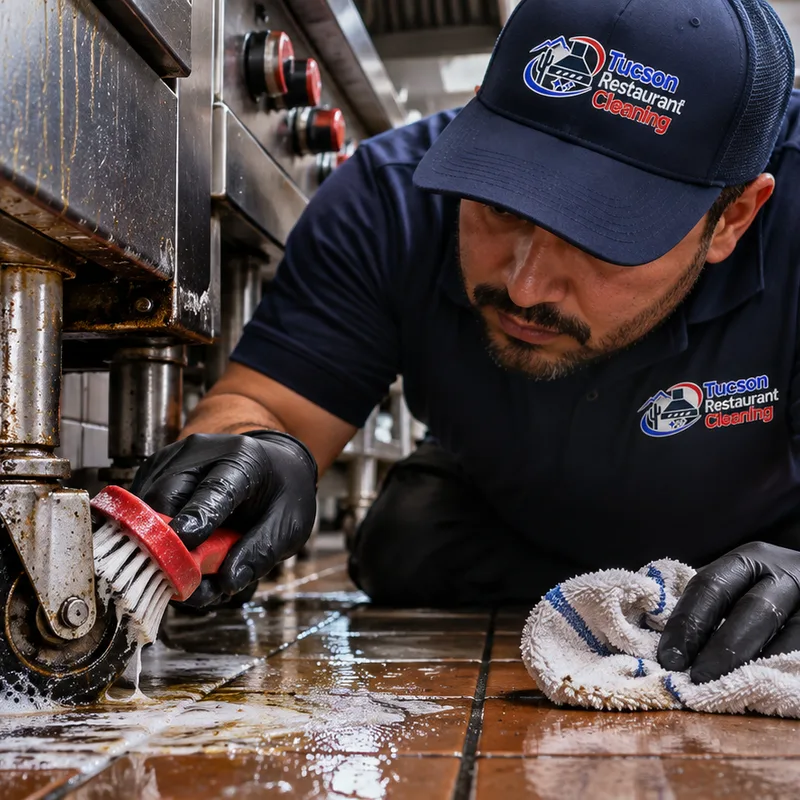
Beyond the Closing Checklist
Degreasing can address appliance fronts, sides, control-area surrounds, legs, and accessible gaps. Sensitive controls, pilot assemblies, and electrical openings require protection.
Soil is loosened along base coves, grout lines, corners, drains, and equipment footprints. The method depends on flooring, drainage, and safe water control.
Shelving, wall surfaces, sink surrounds, cooler exteriors, and non-food-contact work areas can be cleaned after food, utensils, and disposable goods are removed or protected.
Accessible tops of refrigerators, conduits, ledges, beams, pipes, and light exteriors can collect airborne dust and grease that routine wiping misses.
Washable surfaces near refuse containers, mop sinks, and utility areas can be included when access, drainage, and the agreed scope allow.
Handles, kick plates, casters, equipment feet, and floor-wall junctions receive targeted attention because buildup concentrates around contact points and narrow gaps.
Overhead Cleaning Scope
High to
LOW
Defined Scope
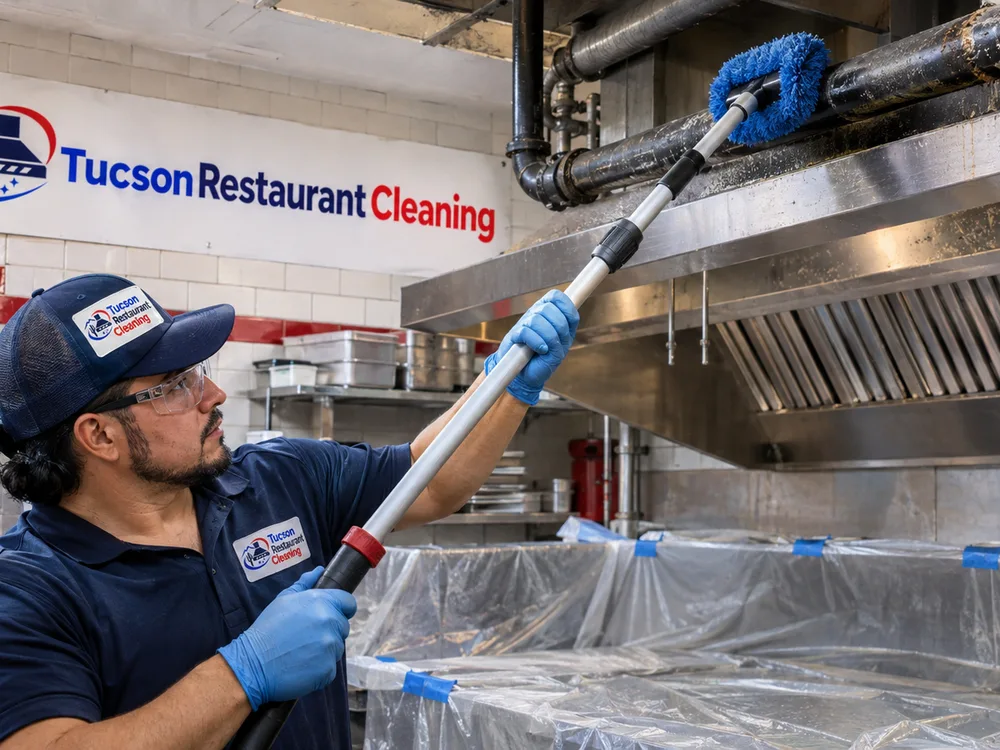
Restaurant High Dusting Catalina Foothills operators request focuses on accessible overhead surfaces that collect dust, lint, and aerosolized grease. Typical targets include exposed pipes, conduit, upper ledges, beam surfaces, refrigerator tops, and the exterior surfaces of reachable light fixtures. The exact work depends on ceiling height, equipment placement, and whether a ladder or commercial lift can be positioned safely.
High dusting should begin before lower surfaces and floors are finished. That order allows loosened material to be captured during the remaining cleaning steps. Food, clean utensils, packaging, and prep equipment must be removed or fully protected first. HVAC components, energized fixtures, fragile décor, and fire-protection devices may require exclusion or service by an appropriate specialist.
Catalina Foothills businesses contend with dry outdoor dust that can enter through doors and loading activity. In a working kitchen, that dust can combine with airborne grease and cling to overhead surfaces. Cleaning frequency should therefore reflect cooking volume, ventilation performance, door traffic, and how quickly residue returns, rather than an arbitrary calendar.
From Review to Reopening
We review the cook line, prep zones, storage areas, floors, overhead surfaces, drainage, equipment access, and operating schedule. The walkthrough identifies heavy buildup, delicate materials, and areas that require another trade.
The plan states which surfaces and equipment exteriors are included, what the restaurant must move or secure, and when the work can begin. It also records exclusions so expectations are clear before the crew arrives.
Food, utensils, paper goods, and clean smallwares are removed or covered. Equipment is cooled or shut down as agreed, and adjacent spaces are protected from overspray, tracked soil, and cleaning residue.
When high dusting is included, overhead surfaces are addressed first. Degreasing, detail work, surface wiping, floor agitation, and residue recovery then proceed in a sequence suited to the kitchen.
The completed scope is reviewed for visible residue and missed access points. The restaurant receives any needed guidance about drying, resetting equipment, or preparing food-contact surfaces for service.
Local Operating Context
Restaurant access in the Catalina Foothills area varies. Some kitchens operate in compact restaurant suites near North Campbell Avenue, while businesses around La Encantada may need cleaning coordinated with shared property access, parking, or delivery schedules. Resorts and hospitality properties near the foothills can also have controlled service routes and limited back-of-house windows. These conditions affect crew entry, equipment staging, water recovery, and how quickly the kitchen must be returned to use.
A good plan starts with the shutdown window. The kitchen may need time for hot equipment to cool before degreasing begins, and cleaned floors need enough drying time before staff return. If appliances must be moved, the restaurant should confirm who is authorized to disconnect gas, electrical, or water connections. Cleaners should not improvise utility disconnections or move equipment that exceeds safe handling limits.
Internal hood, duct, and exhaust-fan cleaning is a distinct service from general kitchen cleaning and high dusting. Likewise, grease interceptors, suppression systems, and appliance internals may require qualified providers. We identify these boundaries during scoping so the cleaning plan stays focused on accessible kitchen surfaces and does not interfere with regulated systems.
Defined Work, Practical Timing
The right frequency depends on what the kitchen cooks and how the space is used. Frying and high-volume sauté work can deposit residue faster than light assembly or beverage service. Long operating hours, tight equipment spacing, textured floors, and limited nightly access can also increase the need for periodic deep cleaning.
Photos can help identify obvious problem areas, but an on-site review is usually more reliable for a large or heavily equipped kitchen. It reveals access behind appliances, ceiling height, floor condition, drainage, and the amount of preparation required. The written proposal should state whether chemicals, labor, equipment, high dusting, and floor work are included. It should also note any access assumptions.
Tucson Restaurant Cleaning focuses on practical scheduling and specific tasks. Managers know what must be cleared before arrival, what the crew will clean, and what remains outside the scope. That preparation reduces disruption and gives the crew more working time for the grease, grime, and overhead buildup that prompted the service.
Arrange a kitchen walkthrough to identify priority areas, access limits, and a cleaning window that fits your operating schedule.
Call for a Free QuoteOperational Details
Pricing depends on kitchen size, grease level, equipment density, access, and the tasks included. High dusting, heavy floor buildup, difficult equipment gaps, or a short overnight window can add labor and specialized access needs. A walkthrough allows Tucson Restaurant Cleaning to provide a written scope based on the actual kitchen rather than a generic per-room price.
A focused cleaning may fit within one closed shift, while a large or heavily soiled kitchen can require a longer window or phased work. Cooling appliances, moving approved equipment, protecting food-contact items, high dusting, and floor drying all affect timing. Catalina Foothills operators should allow time for setup and final review in addition to active cleaning.
High dusting can include accessible exterior surfaces, but it does not automatically include HVAC interiors, hood ducts, exhaust fans, or fire-suppression components. Those systems may require specialized contractors and separate service procedures. The walkthrough identifies which pipes, ledges, beams, and fixture exteriors can be reached safely without disturbing regulated equipment.
After-hours scheduling can be planned when crew access, building rules, and the required work window allow it. Restaurants near shared commercial properties in Catalina Foothills may need to coordinate keys, alarms, parking, loading access, or property-management requirements. The agreed start time should also allow hot equipment to cool safely.
Staff should remove or protect food, clean utensils, disposable packaging, and small equipment from the work area. The restaurant should cool or shut down appliances as agreed and identify anything that cannot be moved or exposed to moisture. Any gas, electrical, or water disconnection should be handled by an authorized person rather than the cleaning crew unless specifically arranged.
Equipment is moved only when its size, connections, condition, and surrounding space allow safe handling under the written scope. Fixed, hard-connected, fragile, or very heavy units generally remain in place unless the restaurant arranges qualified assistance. Accessible sides, fronts, legs, casters, and gaps can still be targeted without unsafe movement.
The interval should be based on residue returning, not a single schedule for every kitchen. Cooking volume, frying, ventilation, operating hours, floor texture, and outdoor dust entering through service doors all affect buildup. A practical plan combines daily staff cleaning with periodic attention to equipment gaps, floor perimeters, upper ledges, and other areas that cannot be reached during closing.
Define the Work
Describe your kitchen, operating hours, and priority concerns. We will help define the scope, preparation requirements, and a practical cleaning schedule.