
Cooking Grease and Oil Film
Kitchen floor degreasing loosens the bonded film found near fryers, ranges, prep lines, and dishwashing areas. Chemistry is chosen for the flooring rather than applied at maximum strength.
Serving Tucson, Arizona & surrounding areas
Restaurant Floor Cleaning · Tucson
Remove built-up grease, dark grout soil, and food residue with a cleaning plan fitted to your kitchen surfaces and operating schedule.
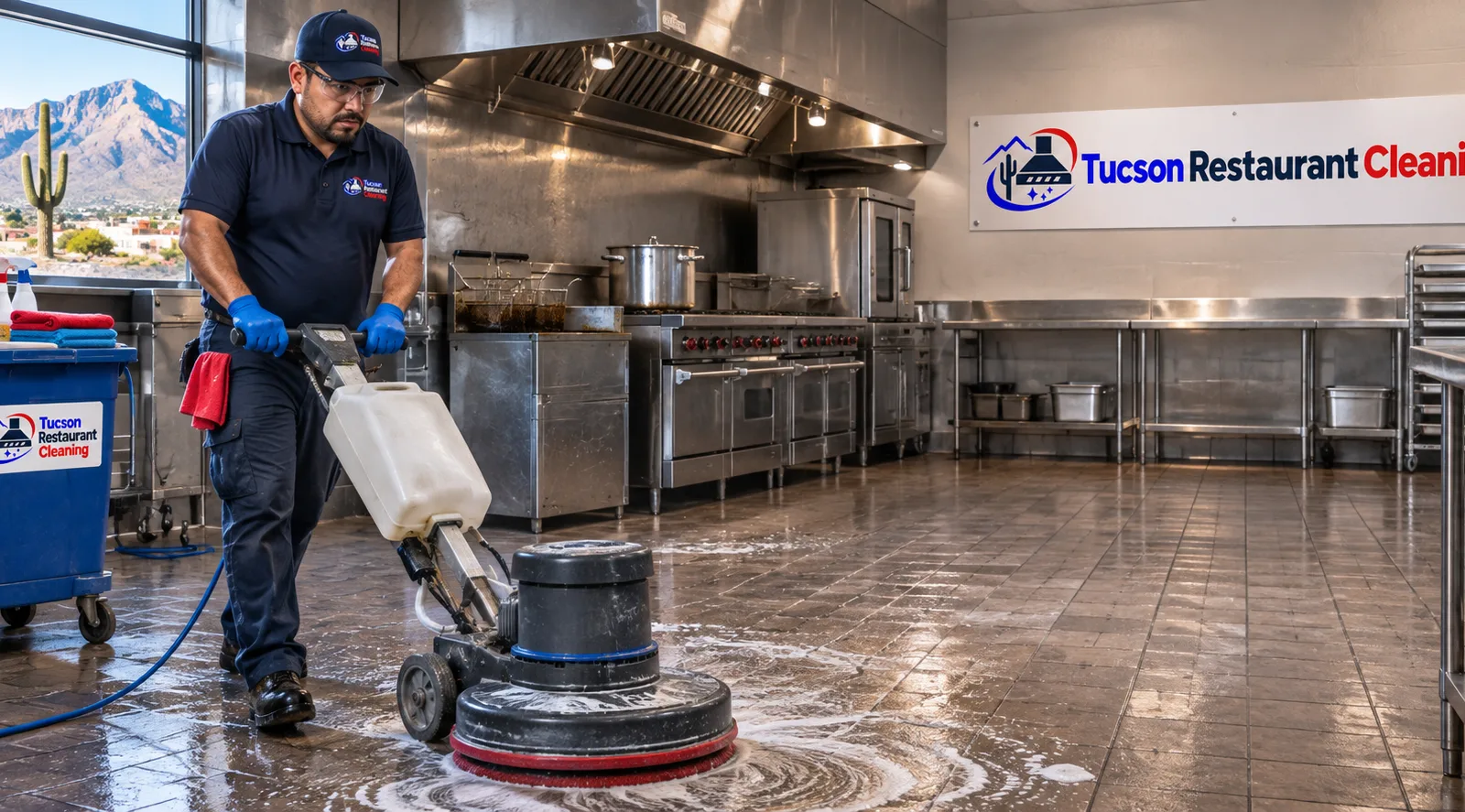
Kitchen
FLOORS
Tucson, AZ
Beyond Routine Mopping
Commercial Kitchen Floor Cleaning targets the grease and compacted soil that routine mopping leaves on tile, grout, and other washable kitchen flooring. Tucson Restaurant Cleaning provides scheduled and one-time service for food-service operations that need a deeper reset without disrupting meal periods.
Hot cooking oil can spread as airborne residue, while spills and tracked-in soil collect in grout lines, corners, and the edges beneath equipment. Reusing cloudy mop water often moves that film across the floor instead of extracting it. Our restaurant specialists serving Tucson, AZ match the degreaser, agitation method, dwell time, and rinse process to the floor and its condition. The goal is a floor that is clean to the touch rather than one that merely looks wet and freshly mopped.
Tucson's dry conditions add fine dust that can combine with kitchen grease and become difficult to remove. This is especially noticeable near exterior doors and service entrances. Downtown restaurants may also have limited loading access and narrow service windows, so arrival, equipment staging, and drying time should be planned before work begins.
Tile and Grout Detail
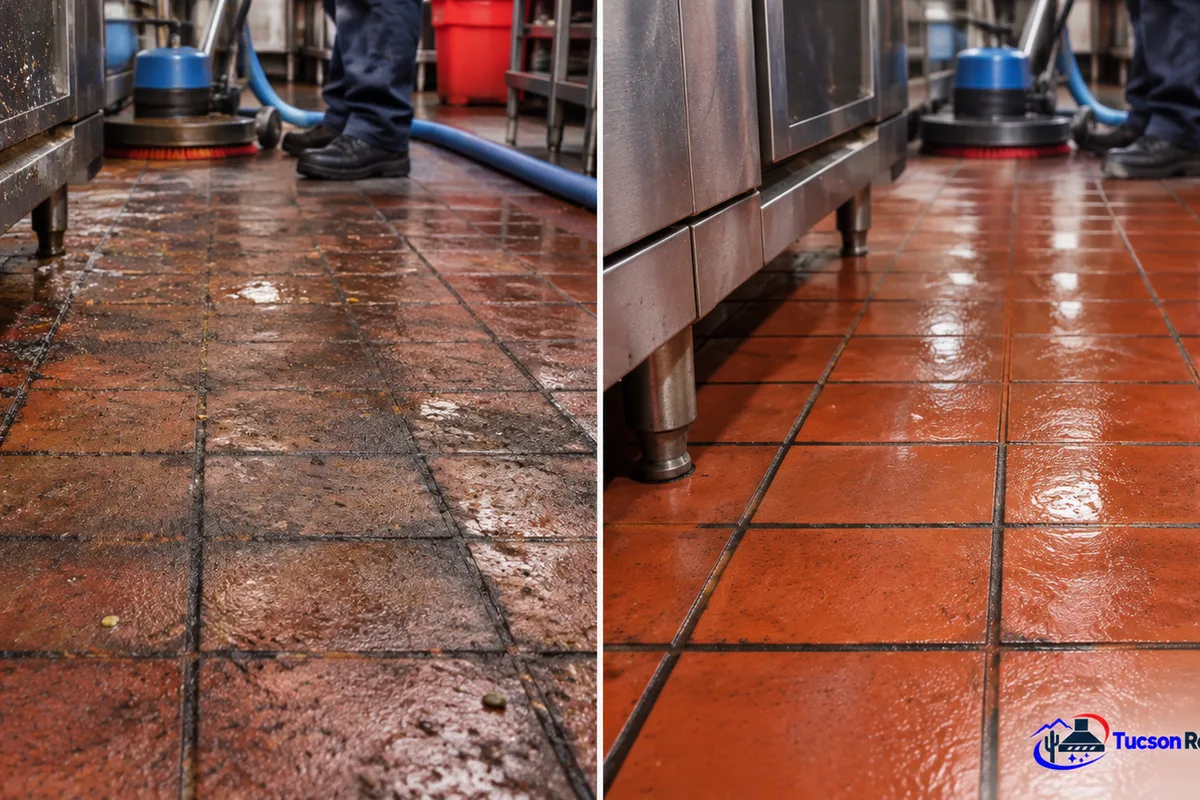
Tile and grout do not soil in the same way. Glazed quarry tile and ceramic tile usually hold contamination at the surface, while cement-based grout has pores and recessed joints that trap grease, food particles, and dirty solution. Restaurant grout cleaning therefore requires focused chemical contact and mechanical agitation rather than repeated passes with a string mop.
We first identify the floor material and inspect for loose tiles, cracked joints, missing grout, damaged transitions, and areas where water may collect. A compatible alkaline degreaser is applied at the correct dilution and allowed adequate dwell time. Agitation with a floor machine or grout brush breaks the bond between the soil and surface. The slurry is then recovered instead of being pushed toward walls or left to dry.
Edges, corners, floor-to-wall transitions, and accessible areas around fixed equipment receive separate attention because a large floor machine cannot reach them. Cleaning can improve the appearance of discolored grout, but it cannot restore grout that has permanently stained, eroded, or absorbed pigment over years of use. Those conditions are identified before expectations are set.
Floor Cleaning Scope
Kitchen floor degreasing loosens the bonded film found near fryers, ranges, prep lines, and dishwashing areas. Chemistry is chosen for the flooring rather than applied at maximum strength.
Detail brushes and machine agitation reach joints that flat mops pass over. Recovered soil is removed so it does not settle into the grout again.
Hand detailing targets wall edges, corners, thresholds, floor drains, and accessible spaces around fixed equipment. Movable items are discussed during scheduling.
Fine desert dust entering through delivery and employee doors can bind with grease. Cleaning removes that mixed residue rather than spreading it across the kitchen.
Cook lines, warewashing routes, walk-in approaches, and paths to service doors often need more agitation because foot traffic compacts soil.
The process is adjusted for quarry tile, ceramic tile, sealed concrete, commercial resilient flooring, and other washable surfaces after an on-site assessment.
Planned Floor Service
Defined
PROCESS
Tucson
We identify the floor type, grease load, drainage, damaged areas, and equipment that limits access. The work window is coordinated around closing, prep, deliveries, or other operating demands.
Loose debris is removed, movable floor items are cleared as agreed, and sensitive adjacent surfaces are protected. Heavy deposits may receive targeted pretreatment before the main application.
A floor-compatible cleaning solution is mixed and applied in manageable areas. Controlled dwell time gives the chemistry an opportunity to loosen grease without allowing it to dry on the surface.
Commercial equipment scrubs the open floor while hand tools address grout joints, corners, thresholds, and accessible equipment edges. Additional passes are used where residue remains.
The suspended grease and dirty solution are extracted or otherwise recovered. The floor is rinsed as appropriate so loosened contamination and cleaner residue are not left behind.
We review the cleaned area, identify permanent staining or repair concerns, and allow for drying before normal kitchen traffic resumes. Any ongoing maintenance recommendations are based on the floor's actual condition.
Tucson Operating Context
A useful cleaning plan accounts for how the restaurant works. A quick-service kitchen with continuous fryer use has different soil patterns than a bakery, commissary, café, or full-service dining room. The amount of movable equipment, access to hot and cold water, floor-drain placement, floor condition, and available shutdown time all affect the scope.
In Downtown Tucson, delivery timing and constrained rear access can influence equipment staging. Fourth Avenue restaurants often operate around evening traffic, while food businesses near the University of Arizona may need service timed around class-day demand and event activity. Kitchens serving Foothills dining areas may have longer service routes between appointments. These factors do not change the cleaning method, but they can change when crews arrive and how the work is divided.
Restaurant Floor Cleaning Tucson operators can schedule as a corrective deep clean, periodic maintenance, or focused work in high-grease zones. Frequency should be based on cooking volume, floor texture, routine mop practices, and how quickly residue returns. Daily in-house cleaning remains necessary between professional visits.
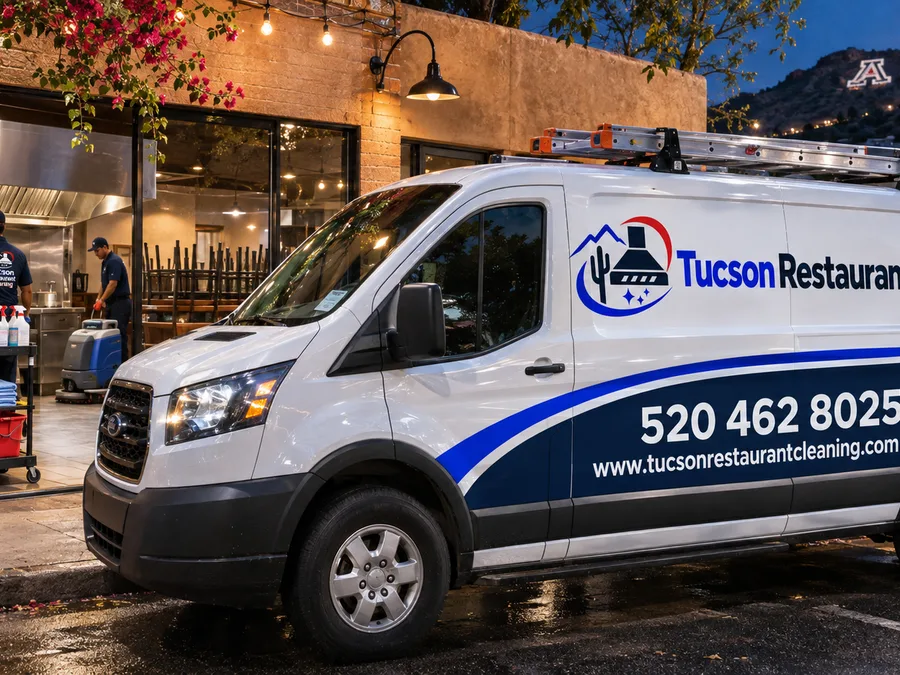
Defined Expectations
A sound written scope states which rooms and surfaces are included, whether movable equipment must be cleared by the restaurant, how floor drains will be handled, and when the area can return to use. It should also separate cleanable soil from physical defects. Loose tile, failed grout, damaged coatings, low spots, and drainage problems require repair rather than stronger cleaning.
For kitchens subject to Pima County food-safety oversight, professional floor cleaning supports day-to-day sanitation but does not replace the restaurant's required cleaning procedures, employee practices, pest controls, or facility maintenance. A greasy floor may contribute to poor footing, yet no cleaning company should promise that a surface will become slip-proof. Slip resistance also depends on the tile profile, footwear, new spills, rinse residue, and ongoing housekeeping.
Before service, staff should secure food, disposable packaging, utensils, and any items stored at floor level. The restaurant should also identify sensitive equipment and confirm what can be moved safely. Tucson Restaurant Cleaning then sets the cleaning method and work sequence based on observed conditions rather than relying on a generic chemical treatment.
Arrange an on-site review to define the cleanable area, access requirements, operating window, and level of grease buildup before the work is scheduled.
Call for a Free QuoteOperational Details
Pricing is based on cleanable square footage, grease severity, floor material, grout condition, equipment access, and the available work window. A relatively open quarry-tile floor usually requires less detail labor than a tight cook line with fixed equipment and heavy deposits. An on-site review at the Tucson restaurant is the best way to produce an accurate written scope.
No, cleaning removes recoverable grease and soil but cannot reverse permanent discoloration, eroded grout, old pigment absorption, or chemical damage. Cement-based grout is porous, so results depend on its age and condition. A test area can help distinguish removable buildup from staining before the full Tucson kitchen is cleaned.
Many restaurant kitchens can be cleaned within one planned closed period, but the actual duration depends on floor area, buildup, access, and drying needs. Heavy grease may require pretreatment and repeated agitation. Downtown access limits or a short interval between closing and morning prep should be discussed during scheduling.
Movable mats, bins, racks, and small floor items generally need to be cleared, while fixed or connected equipment normally stays in place. The agreed scope should identify what restaurant staff will move and which accessible perimeters the crew will detail. Gas, electrical, plumbing, and refrigeration connections should not be disturbed simply to clean beneath equipment.
Common washable surfaces include quarry tile, ceramic tile, sealed concrete, and certain commercial resilient floors, but each requires a compatible process. Strong alkalinity and aggressive brushes are not appropriate for every coating or finish. The material is inspected before chemicals, pads, brushes, pressure, and water volume are selected.
The right interval is determined by cooking volume, grease production, floor texture, traffic, and the effectiveness of daily mopping. Fryer-heavy kitchens may need focused degreasing more often than low-grease food operations. Fine Tucson dust entering through service doors can also shorten the useful interval when it binds with oily residue.
The kitchen should reopen only after the floor has been rinsed as required, dried adequately, and released for normal traffic. Drying time varies with ventilation, floor texture, indoor conditions, and the amount of water used. The service window should include drying rather than ending at the final scrub pass.
Define the Work
Tell Tucson Restaurant Cleaning about the floor material, problem areas, grease level, and preferred service window. We will help define a practical scope for tile, grout, edges, and high-use kitchen zones.